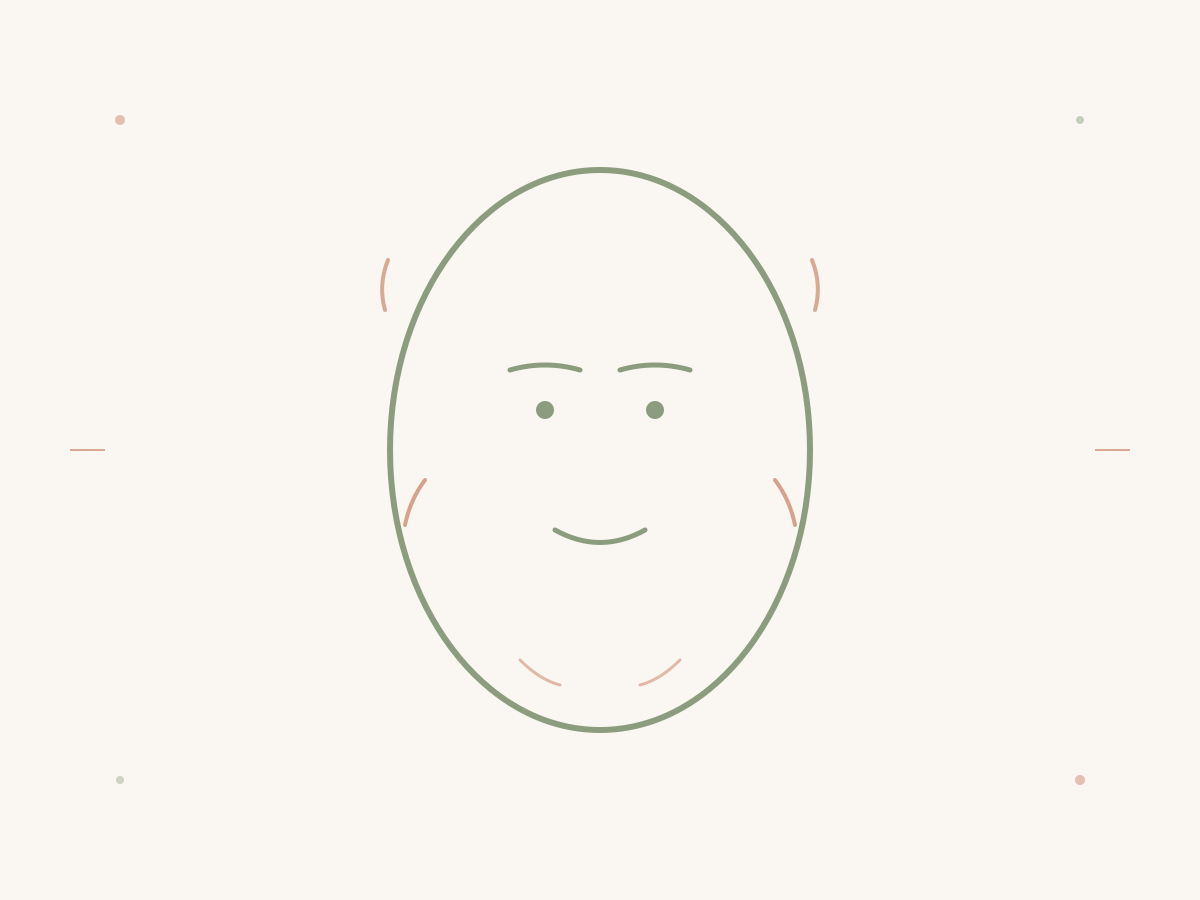
Two different tools for two different problems.
Botox (botulinum toxin) relaxes the small facial muscles whose repeated contraction creases the skin. It treats dynamic lines — the forehead rows, the frown lines between the brows, crow's feet around the eyes — lines that appear or deepen when you make an expression. Results appear over 4–7 days and typically last 3–6 months. Used early and conservatively, it also slows those lines from becoming permanently etched.
Dermal fillers are smooth hyaluronic-acid gels that restore volume and structure the face loses with age. They treat hollows and folds that are visible even when your face is at rest — sunken under-eyes, flattened cheeks, deep nasolabial folds, thinning lips, an undefined jawline. Results are immediate and last anywhere from 6 to 18 months depending on the product and area.
The simplest way Dr. Kanchan explains it at the Aliganj clinic: if the line shows only when you move, think Botox. If the hollow or fold is there at rest, think filler. Many faces past their mid-thirties benefit from a small amount of both — treated across separate or combined sessions.
How a dermatologist decides — the assessment.
A good aesthetic consultation starts with your face at rest and in motion, not with a price list. The questions that decide the plan:
- Where is the ageing actually happening? Upper face ageing (forehead, frown, eyes) is mostly muscular — Botox territory. Mid and lower face ageing (cheeks, folds, lips, jawline) is mostly volume loss — filler territory.
- Is the line dynamic or static? Lines that have become visible at rest often need a combination: Botox to stop the creasing, a little filler to lift the etched line.
- What does your face need to keep doing? Expressions matter. Dr. Kanchan's philosophy — refined during AAAM certification and years of UK practice — is consistently conservative: refreshed, not overdone. The goal is that people notice you look well-rested, not that they notice work was done.
- What's your timeline and budget? Botox is the smaller, more frequent commitment; fillers cost more per session but last much longer. An honest plan sequences them sensibly rather than selling everything at once.
Safety, side effects and red flags.
Both treatments have excellent safety records when performed by a qualified medical professional using genuine products. The risks concentrate almost entirely at the bargain end of the market.
- Common and temporary: pinpoint bruising, mild swelling, a heavy feeling (Botox) for a few days. These settle on their own.
- Uncommon but reversible: a slightly uneven result — correctable at review. Hyaluronic-acid fillers have a safety net: they can be dissolved with hyaluronidase if needed.
- Rare and serious: filler entering a blood vessel (vascular occlusion) is a genuine medical emergency requiring immediate recognition and treatment — the single strongest argument for choosing a doctor who understands facial anatomy over a discount salon.
- Red flags to walk away from: unbranded or decanted product, no medical consultation before injection, pressure to treat the whole face on day one, and prices dramatically below market — genuine product has a genuine cost.
At the clinic, all injectables are performed personally by Dr. Kanchan Srivastava with branded, traceable products — never delegated to technicians.
Think twice (or wait) if…
- You are pregnant or breastfeeding — both treatments wait until later.
- You have a neuromuscular condition (for Botox) or active skin infection at the treatment site.
- You're seeking a dramatic transformation — injectables refine; they don't redesign a face, and chasing that look is how results turn unnatural.
- You're under 25 and considering preventive treatment — sometimes reasonable, but it deserves an honest conversation, not a sales pitch.
The right answer to “Botox or fillers?” is sometimes “neither yet” — better skincare, sun protection and a medi-facial programme can buy years before injectables make sense. A consultation should tell you that honestly.
Ready to take the next step?
Book a consultation with Dr. Kanchan for an accurate diagnosis and personalised treatment plan.
Frequently asked questions.
Will Botox freeze my face or make it expressionless?
Which lasts longer, Botox or fillers?
Do the injections hurt?
What is the right age to start?
Can fillers be reversed if I don't like the result?
Can I get Botox and fillers in the same session?
What patients say.
My experience has been very good. Dr. Kanchan ma'am treated me — she is the best dermatologist in the town.
Having been a regular at the doctor's clinic I absolutely love how hygienic and professional they've always been. My laser treatment has been very effective. If you are looking for a good doctor for cosmetic treatment, you can blindly trust Dr Kanchan ma'am.
Dr. Kanchan Srivastava is a very good dermatologist. Doctor behaviour is so curious and good.